
LoggFi · Transport · India
Cold chain transport monitoring: check suitability first
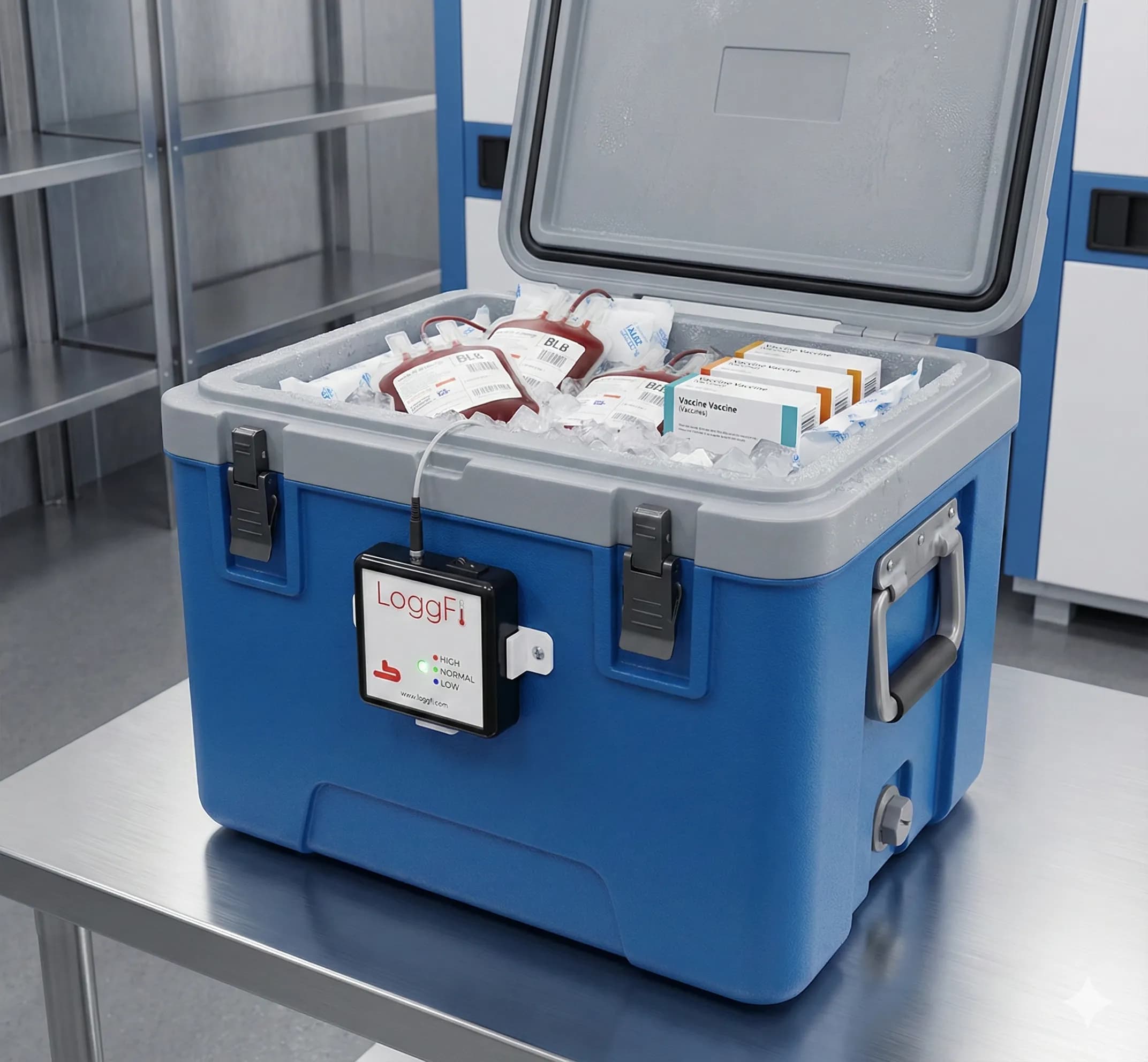
Transport temperature monitoring records conditions during a journey and supports review at dispatch and receipt. A connected logger also needs suitable power, mounting and network service throughout its intended use. LoggFi suitability for a moving refrigerated vehicle must be assessed before a transport installation is quoted or accepted.
01 · The application
Where to plan your monitoring
Dispatch preparation
Define the shipment, product requirements, journey duration and measurement positions. Decide whether you need conditions within packaging, cargo-area air measurements or both; they are different monitoring tasks.
The moving vehicle
Assess vehicle power, vibration, mounting, moisture and temperature exposure. Confirm the installation with the supplier and vehicle operator. A fixed-facility logger specification alone does not demonstrate suitability on a route.
Receipt and handover
Agree how the receiving team will obtain the record and associate it with the shipment. Include delayed uploads and missing periods in the acceptance process instead of assuming a final dashboard reading describes the entire journey.
02 · Before installation
Information needed for a transport suitability review
Power across the whole journey
Describe vehicle supply arrangements, stops and engine-off periods. The catalogue specifies 5V USB input; this is not permission to connect directly to a vehicle’s electrical system.
Route and network service
Listed GSM models use GSM/GPRS (2G). Check compatible service along the intended route and at stops; a phone’s 4G or 5G reception does not establish logger connectivity.
Mounting and environment
Provide the vehicle type, proposed enclosure location, cable route and probe position. Confirm installation suitability for vibration, condensation, cleaning and the electronics operating environment.
Outage and delivery evidence
Specify the longest expected communication gap and recording interval. Confirm storage capacity, buffer-full behaviour, reconnection and how the receiver will review the complete shipment record.
03 · People and records
Agree a trial before operational rollout
Define acceptance criteria
Agree measurement locations, power duration, required records and the response to missing data. Choose a representative route and conditions with the transport and quality teams.
Record the trial
Use the proposed installation and capture dispatch, stops, power changes, uploads and arrival observations. Compare timestamps and document any gaps or unexpected behaviour.
Review before acceptance
Have the responsible teams assess the evidence against the agreed criteria. Confirm installation changes and operating instructions before using the setup for routine shipments.
04 · Catalogue options
Match the sensor to the requirement
LoggFi
NTC · −40°C to +50°C
Review the core sensor range as one part of a feasibility discussion. A GSM model is a candidate for assessment, not a confirmed transport recommendation.
Compare LoggFi optionsLoggFi+ PT100
PT-100 · −200°C to +400°C
Discuss the required sensing range if the core family does not cover the shipment. A wider sensor range does not resolve power, mounting or environmental suitability.
Compare LoggFi+ PT100 optionsRanges above come from the LoggFi catalogue. Confirm the supplied probe and calibration scope. The listed electronics environment is 10 – 40°C · 30 – 70% RH; a sensor range does not describe enclosure suitability.
Choose the connection separately: WiFi models use facility internet, while listed GSM models need compatible GSM/GPRS (2G) service. Remote readings and notifications depend on power, connectivity and the configured service. Use the wireless installation guide to plan outages and acceptance tests.
Transport monitoring questions
Is LoggFi already validated for refrigerated vehicles?
Transport suitability requires a review of the proposed vehicle, route and installation. This page does not claim a validated vehicle installation. Request confirmation and an agreed trial before choosing a device for operational shipments.
Does GSM provide GPS tracking or uninterrupted live readings?
GSM connectivity does not establish GPS location tracking. Remote temperature readings require compatible service and power; uploads may be unavailable during a coverage gap. Confirm any location requirement separately and review timestamps.
Can the battery cover our entire shipment?
Do not assume that a typical catalogue backup figure covers a journey. Provide total transit time, expected delays and power availability. Confirm runtime with the supplied unit and proposed configuration, and distinguish battery duration from offline storage capacity.
Your next step
Request a transport suitability review
Share the details below with the LoggFi team in Kochi. Ask for the device, cloud service, calibration and installation costs to be itemised for your requirements.
Send a transport enquiry- Vehicle type and proposed mounting location
- Route, journey duration and expected delays
- Shipment temperature and probe requirements
- Available power including engine-off periods
- GSM operator, coverage gaps and handover-record needs