
LoggFi · India
GSM temperature data logger for sites without WiFi
A GSM data logger records temperature and sends readings over a cellular connection using a SIM card. LoggFi GSM models provide cloud temperature monitoring for locations where facility WiFi is unavailable or unsuitable.
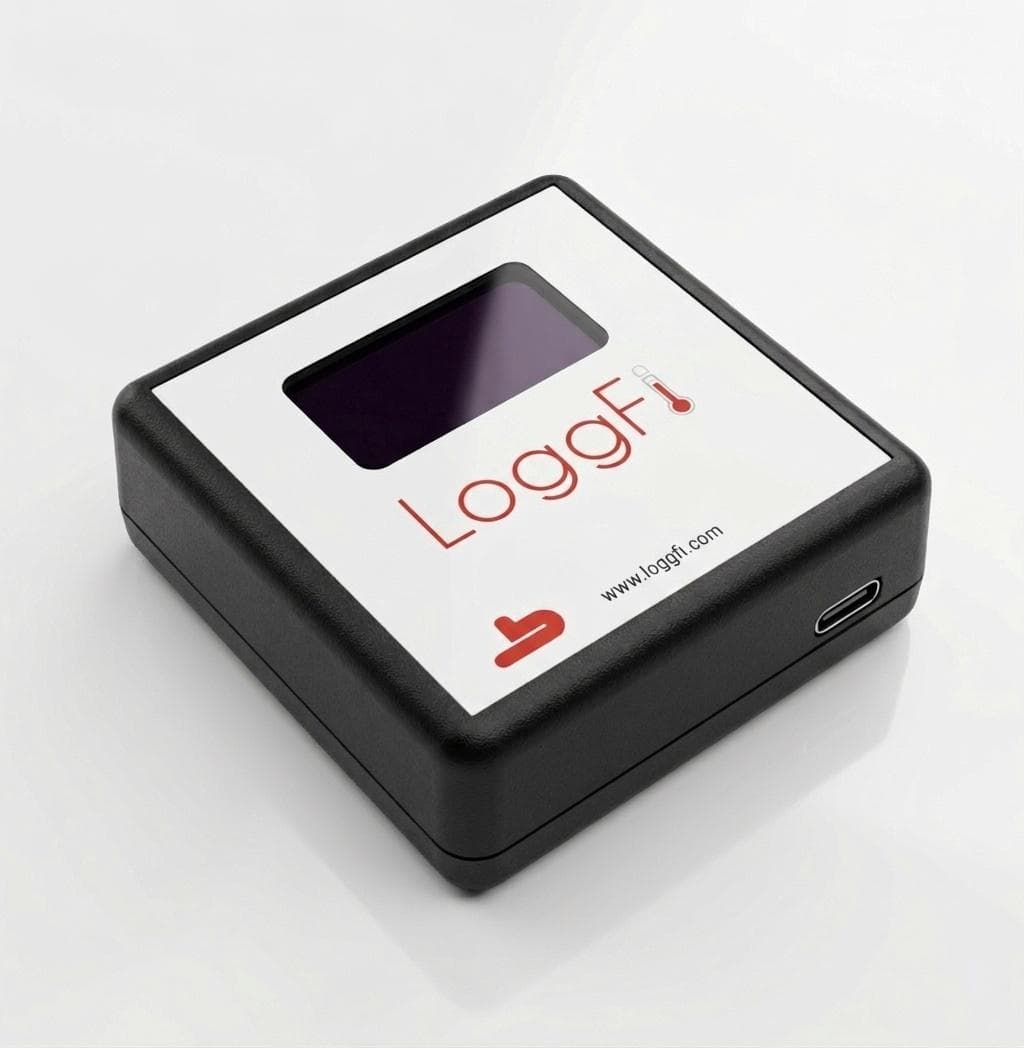
When to choose a GSM logger
Choose GSM when you need connectivity independent of the site’s WiFi. The models in this catalogue use GSM/GPRS (2G), so confirm compatible operator coverage at the installation point before ordering.
LoggFi is offered by Bagmo Private Limited in Kochi, Kerala. Discuss your facility, sensor requirements and deployment location in India with our team before selecting a model.
Compare WiFi data loggersWhich GSM temperature logger is best for a location without WiFi?
Choose a logger that supports the cellular service available at the actual monitoring point, matches your required probe range and accuracy, and has enough offline storage for your expected signal interruptions. LoggFi’s listed GSM models use GSM/GPRS (2G); confirm compatible service before selecting a model.
Cellular technology and coverage
Ask the intended operator to confirm compatible 2G service and test a logger at the installed position. A phone showing 4G or 5G signal does not demonstrate compatibility with a 2G logger. Confirm the operator’s service availability for your planned deployment period.
SIM ownership and ongoing costs
Confirm who supplies and maintains the SIM, the compatible plan and activation requirements, expected data use at your chosen upload interval, and recharge or renewal responsibility. Ask whether alert charges are part of the SIM plan, the LoggFi service, or a separate line item.
Uploads and alarm delivery
Demonstrate cloud uploads and configured call, SMS and email alerts at the site. Agree on recipients, thresholds and what happens during a signal interruption. Independence from WiFi does not mean independence from cellular service; confirm any local alarm requirement separately.
Sensor, calibration and installation
Match the NTC or PT100 probe to your working temperatures and request accuracy and calibration evidence for the supplied assembly. Check where the electronics will be mounted and how they will be powered. The probe’s measurement range is different from the logger electronics’ operating limits.
Plan separately for network outages and power cuts
At a five-minute logging interval, SMD102's 500 readings cover approximately 41.7 hours of storage. This assumes an empty buffer, continuous power and one stored reading per interval.
Storage capacity is not battery runtime. The catalogue lists battery backup as 20 – 30 hrs typical. Confirm what happens when memory fills, how readings upload after reconnection, and how the device and network will stay powered. Cloud updates and remote alerts still need a working connection.
Calculate storage for your logging intervalWhich GSM data logger model should I buy?
Use your application to shortlist a sensor family, then compare the models below. This guide compares LoggFi configurations using the published product catalogue; confirm the supplied assembly and service terms in your quotation.
Routine temperature monitoring
Start with the NTC models for refrigerators, rooms or storage areas whose required temperatures fit the listed range. Choose an OLED model when staff need to read the temperature at the device.
Catalogue temperature range: −40°C to +50°C
Before choosing: Confirm the required accuracy and probe placement; use a different probe family if your working temperatures fall outside this range.
A wider temperature range
Compare PT100 models for laboratory equipment or processes that need a wider measurement range. Display and compact versions are available for each connection type.
Catalogue temperature range: −200°C to +400°C
Before choosing: Confirm probe construction, mounting and calibration at your working temperatures. The probe range is not the operating range of the electronics.
Temperature and humidity together
Compare Hygro models for rooms or storage areas where relative humidity matters as well as temperature. These models include an OLED display.
Catalogue temperature range: −40°C to +50°C
Before choosing: The catalogue lists the humidity range but not humidity accuracy. Request humidity accuracy and calibration details for the supplied assembly.
An audible alarm at the site
Compare SonicGuard+ models when nearby staff need a hooter alongside the configured remote alert service. Confirm whether your quotation includes a display.
Catalogue temperature range: −40°C to +50°C
Before choosing: Ask for a demonstration of the local alarm during network and power interruptions; do not assume its behaviour from the presence of a hooter.
GSM data logger models and specifications
Select the sensor first, then the display and alarm options. Temperature ranges refer to the sensor; the electronics have a separate operating environment.
| Model | Sensor / family | Temperature range | Accuracy | Display | Offline readings |
|---|---|---|---|---|---|
| SMD102 | LoggFi NTC | −40°C to +50°C | ±0.5°C | OLED | 500 |
| SM102 | LoggFi NTC | −40°C to +50°C | ±0.5°C | None | 500 |
| SMD102PT | LoggFi+ PT100 PT-100 | −200°C to +400°C | ±0.5°C | OLED | 500 |
| SM102PT | LoggFi+ PT100 PT-100 | −200°C to +400°C | ±0.5°C | None | 500 |
| SMD102HM | LoggFi Hygro NTC & SHT20 | −40°C to +50°C | ±0.5°C | OLED | 500 |
| SM102A / SMD102A | LoggFi SonicGuard+ NTC | −40°C to +50°C | ±0.5°C | Optional | 500 |
Hygro models also monitor 0–90% RH. Call, SMS and email alerts are listed in the catalogue; confirm the service configuration and any recurring charges in your quotation.
- Logging interval
- 1 – 40 minutes
- Input / charging
- 5V USB
- Battery backup
- 20 – 30 hrs typical
- Enclosure
- ABS Plastic · IP4X
- Operating env.
- 10 – 40°C · 30 – 70% RH
- Calibration
- Internal / NABL
Confirm the probe-specific accuracy, calibration points and certificate scope for your application. Battery backup is typical and depends on operating conditions.
Compare total costs, warranty and support
Request an itemised quote for the same number of monitoring points and service period. Compare the first-year total and the ongoing annual cost; the device price alone does not tell you what the complete monitoring setup will cost.
- Hardware and installation
- Identify each logger model, probe, display or hooter option, required accessories and installation work. Ask whether delivery, commissioning, training and applicable taxes are included.
- GSM connectivity
- Itemise SIM supply or activation, data-plan renewals and any required installation work. Confirm responsibility for maintaining an active plan and whether call or SMS alert charges are included elsewhere in the quotation.
- Cloud service and alerts
- Confirm the subscription period, renewal price, number of users and devices, data retention, report/export access and any call, SMS or email limits and charges. Ask what access remains if the service is not renewed.
- Calibration and maintenance
- Specify the certificate and calibration points needed for each supplied assembly. Itemise initial calibration, recalibration, replacement probes or batteries, and any collection, shipping or service charges that apply.
Get the warranty and support terms in writing
A standard warranty duration and detailed coverage are not published on this page. Confirm the term, exclusions, coverage of the probe and battery, repair or replacement arrangements, support hours and expected response times before ordering. Ask which services remain chargeable during the warranty period.
Request an itemised GSM quotePlan your installation
- Confirm GSM/GPRS (2G) service and signal at the actual monitoring location with your intended SIM operator.
- Confirm the SIM and data plan, recurring charges and responsibility for maintaining service.
- Select an NTC or PT100 probe for the required temperature range and plan the power supply and mounting.
- Test cloud uploads, configured call/SMS/email alerts and reconnection behaviour at the site.
GSM data logger questions
Does a GSM temperature data logger work without WiFi?
Yes. It uses a SIM-based cellular connection instead of WiFi. Compatible cellular coverage and an active service plan are still required for cloud uploads and remote alerts.
Are these LoggFi GSM models 4G or 5G devices?
The models listed in the current LoggFi catalogue use GSM/GPRS (2G). Do not assume 4G or 5G compatibility. Confirm the required network technology and local operator support with LoggFi before purchase.
Can the GSM logger store readings without a mobile signal?
The listed LoggFi GSM temperature logger models store 500 offline readings. Cloud updates require cellular connectivity. The time covered by local storage depends on the selected logging interval.
What is the price of a GSM data logger in India?
Pricing depends on the sensor, display, number of devices and service requirements. Request a quote that identifies the device price, SIM/data charges, cloud service, calibration and installation costs.
Is a calibration certificate included with every logger?
Confirm this in the quotation. The catalogue lists internal / NABL calibration options, but does not specify a certificate for every supplied configuration. Ask which probe and logger are covered, which temperature or humidity points are tested, and whether calibration and later recalibration are separately charged.
What warranty and support are included?
A standard warranty duration and detailed coverage are not published on this page. Ask LoggFi to confirm the term, exclusions, coverage of the probe and battery, repair or replacement process, support hours and any service charges in writing before ordering.
Discuss your monitoring requirement
Tell us your temperature range, number of monitoring points, facility location and calibration needs.