
LoggFi · Blood banks · India
Temperature monitoring for blood bank storage
Blood bank temperature monitoring needs to reflect the component being stored and the equipment used. A single temperature rule cannot cover every component and storage stage. Evaluate LoggFi as part of a monitoring plan approved by the blood bank’s quality team, with defined calibration, response and record requirements.
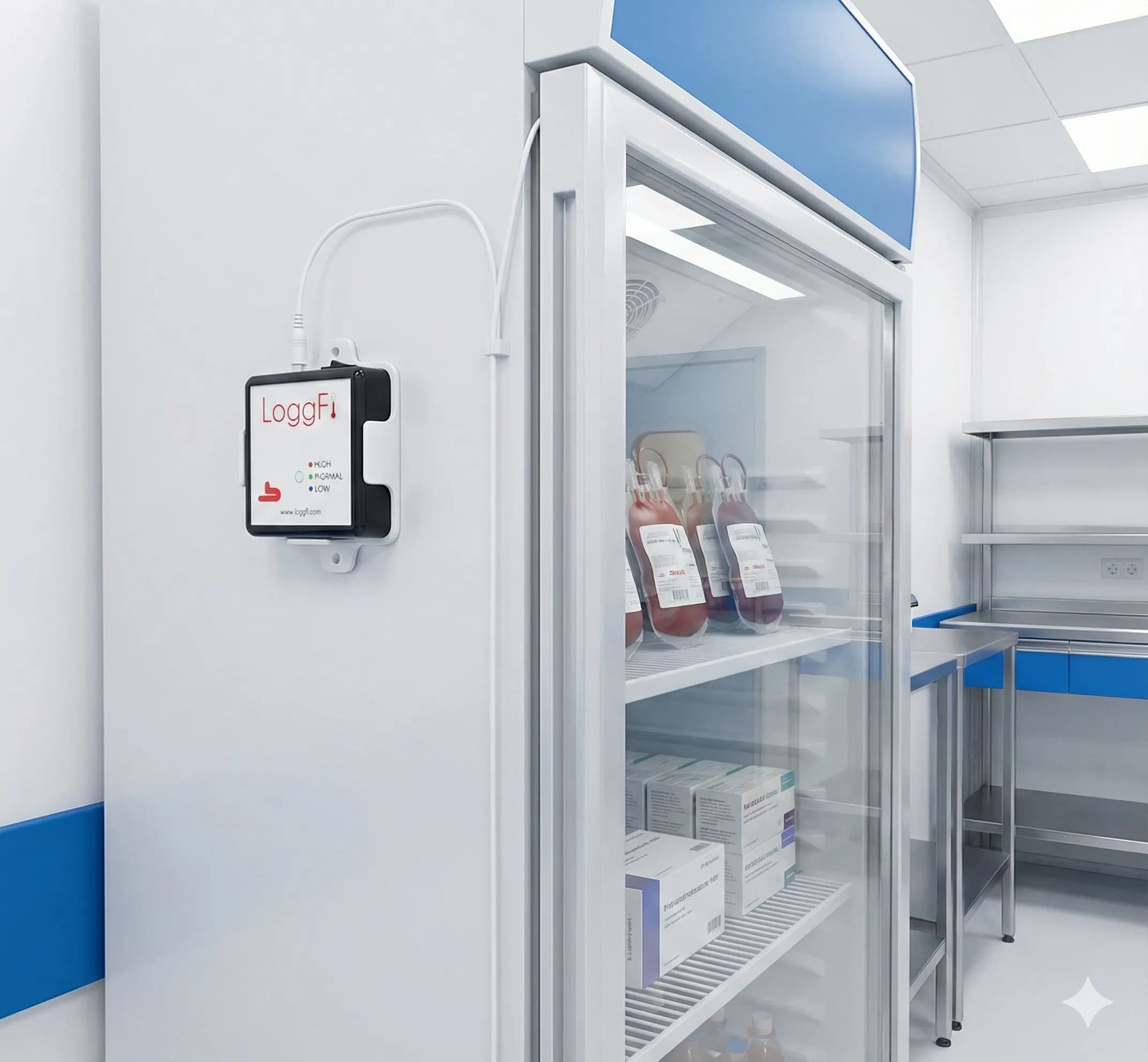
01 · The application
Where to plan your monitoring
Blood storage refrigerators
Identify each refrigerator and its monitoring point. Agree probe placement and limits under the blood bank’s procedures, and distinguish an equipment display reading from an independently recorded measurement.
Frozen component storage
Specify the exact component-storage temperature and lowest working condition. Check that the sensor range and probe assembly cover the requirement, with appropriate calibration evidence for the supplied setup.
Separate component workflows
Create a distinct monitoring brief for equipment with different component or process requirements. Temperature recording does not establish other equipment functions, such as agitation, or determine component suitability for issue.
02 · Before installation
Build the monitoring specification with the quality team
Component and equipment register
List the components, storage units, approved limits and responsible owners. Associate each sensor with a specific equipment identity.
Measurement and calibration
Agree the reference method, probe position, working range and required calibration points. Confirm the certificate scope and how replacement probes will be managed.
Escalation across shifts
Specify the initial recipient, backup contact and escalation procedure. Demonstrate the configured notification path and confirm who handles an event outside normal hours.
Records for investigation
Define how readings will be retrieved and linked to equipment and component records. Demonstrate the available data and required retention before acceptance.
03 · People and records
Keep an excursion linked to the correct storage unit
Confirm the unit and time
Check the equipment identity, reading timestamp, alert and connection status. Use the reference checks specified by your procedure to investigate the observation.
Follow authorised assessment
Refer affected components to the responsible blood-bank team under its established procedure. A dashboard reading is not an automatic decision to release, discard or use a component.
Retain the evidence
Keep relevant temperature records with the event assessment, equipment actions and authorised outcome. Review the monitoring setup if the event exposes a gap in coverage or response.
04 · Catalogue options
Match the sensor to the requirement
LoggFi
NTC · −40°C to +50°C
Evaluate NTC models for equipment whose required range is covered. Agree the probe configuration and calibration evidence with the quality team.
Compare LoggFi optionsLoggFi+ PT100
PT-100 · −200°C to +400°C
Discuss PT100 for equipment requiring temperatures beyond the NTC range. Model selection must follow the exact component-storage requirement.
Compare LoggFi+ PT100 optionsRanges above come from the LoggFi catalogue. Confirm the supplied probe and calibration scope. The listed electronics environment is 10 – 40°C · 30 – 70% RH; a sensor range does not describe enclosure suitability.
Choose the connection separately: WiFi models use facility internet, while listed GSM models need compatible GSM/GPRS (2G) service. Remote readings and notifications depend on power, connectivity and the configured service. Use the wireless installation guide to plan outages and acceptance tests.
Blood banks monitoring questions
Can all blood components use the same alarm limits?
No. Have the blood bank define limits for each component, storage stage and equipment type using its applicable requirements. Configure and verify the monitoring plan separately for each use.
Does a remote logger replace the refrigerator alarm?
Keep the equipment’s own alarm and checks within the facility’s procedure. Remote monitoring adds a separate record and notification path; verify how the two systems are used and how events are escalated.
Does this page establish approval for blood-bank use?
No certification or regulatory approval for a specific installation is established here. Supply the required technical, calibration and qualification documents for review by the blood bank before purchasing or accepting the system.
Your next step
Discuss blood-bank monitoring
Share the details below with the LoggFi team in Kochi. Ask for the device, cloud service, calibration and installation costs to be itemised for your requirements.
Request a blood banks quote- Component types and storage equipment
- Approved limits for each unit
- Equipment count and probe-placement requirements
- Calibration and qualification requirements
- Shift escalation and record-retention needs